A beard does not look sharp by accident. It gets that way because it is trimmed properly and not wrecked by bad habits.
That is where a lot of men go wrong.
They think trimming means taking a bit off the edges, cleaning up the neck, and hoping the beard still looks balanced when they are done. Then the neckline ends up too high, the cheek line gets butchered, one side sits heavier than the other, and the whole beard starts looking either neglected or overworked.
A good trim does not make the beard look shorter. It makes it look stronger. Better shape. Better balance. Less bulk in the wrong places. More control everywhere else.
These are the beard trimming tips that actually matter.
1. Start with a Clean, Dry Beard

If you trim a wet beard, you are guessing.
Wet beard hair stretches and sits differently. It looks longer than it really is, which is why men take too much off and only realise it once the beard dries and tightens back up. That is one of the easiest ways to ruin a beard in five minutes.
Wash it first, then let it dry properly.
A clean, dry beard shows the real length, the real density, and the real shape you are working with. That is what you trim. Not the soaked version.
2. Comb It Properly Before You Touch a Trimmer
Too many men skip this because they think it is just a tidy-up step.
It is not.
Combing shows you where the bulk is really sitting, where the beard is clumping, and which beard hairs are sticking out because they are too long rather than just bent out of place. Without that, you are trimming blind.
Comb it first, then back down into place.
That gives you a proper read on the beard before you start cutting into it.
3. Pick a Shape Before You Start Cutting
A lot of bad beard trims happen before the trimmer even touches the beard.
Men go in with no clear plan, tidy one side, shorten the other to match it, then keep adjusting until the whole beard is shorter than they wanted. That is not trimming. That is drifting.
Decide what you are actually trying to keep before you start. More weight at the chin, tighter sides, a sharper neckline, a fuller mustache, less bulk through the jaw. If you know the shape first, every cut has a job. If you do not, the beard ends up paying for your indecision.
4. Get the Neckline Right or the Whole Beard Looks Off

A bad neckline ruins a beard fast.
Set it too high and the beard looks weak and unnatural. Let it drop too low and it starts blending into the neck and dragging your whole face down. Men get this wrong all the time, then wonder why the beard never looks solid no matter what they do elsewhere.
The neckline should usually sit around two fingers above the Adam’s apple, then curve naturally toward the jaw.
Not halfway up the jaw. Not floating under the chin. Not disappearing into the neck. Get this line right and the whole beard starts looking stronger immediately.
5. Stop Butchering the Cheek Line
A lot of men think sharper always means better.
It does not.
The cheek line should look clean, not carved into your face like you were trying to draw the beard on. The second you force it too low, the beard starts looking smaller, weaker, and more artificial than it needs to.
Clean the strays above the line and leave the rest alone.
A good cheek line sharpens the beard without making it look overmanaged. That difference matters.
6. Trim the Shape, Not Just the Length
This is another common mistake.
Men get so focused on taking off length that they stop paying attention to shape. Then the beard may be shorter, but it is still too wide at the sides, too heavy at the chin, or thicker on one side than the other.
A good trim is not just about making the beard shorter.
It is about deciding where the weight should stay and where it should come off. That is how you keep the beard looking full without letting it turn into one thick block of hair.
7. Use Guards to Control Bulk, Not Guesswork
This is where discipline matters.
If you start too short because you think it will save time, you usually regret it. Bulk should come down gradually. Once it is gone, it is gone.
Start longer than you think, then reduce.
That gives you room to adjust without wrecking the shape. Most beard trimming mistakes happen because a man gets impatient and takes off too much in the first pass.
8. Match the Trim to the Beard Stage

A short beard should not be trimmed like a full beard.
That sounds obvious, but men ignore it constantly.
If the beard is still growing in, trimming too aggressively around the edges can make it look patchier than it really is. If it is already full, refusing to take out weight in the right places makes it look bloated and heavy. Different stage, different job.
Trim the beard you actually have.
Not the beard you are hoping it will become in six weeks.
9. Use Scissors Where Trimmers Get Clumsy
A beard trimmer is not good at everything.
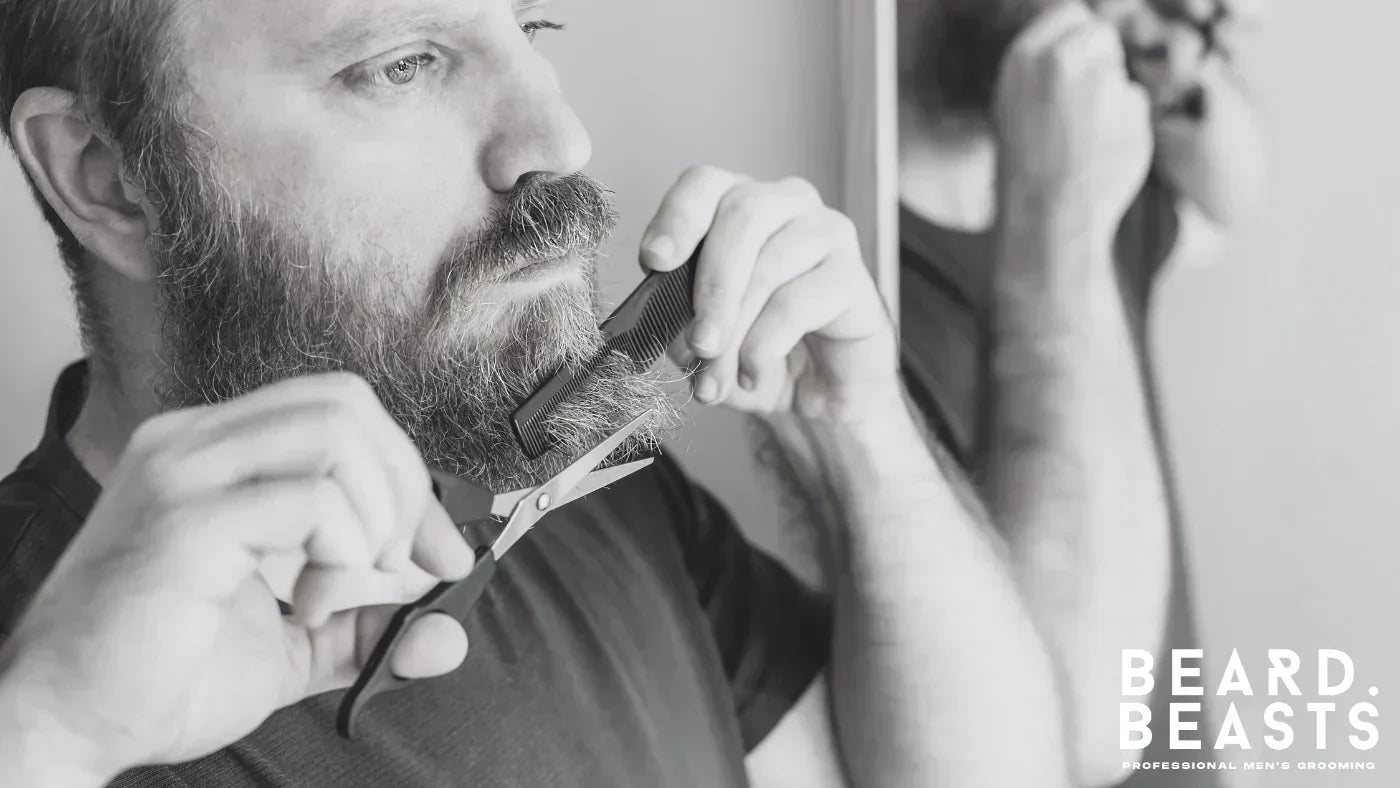
It handles bulk, outlines, and general structure well. It is not as good at the small finishing work that makes a beard look properly maintained. That is where scissors matter.
Use them for the mustache, the outer edges, and the stray hairs that sit outside the shape.
That is the part that separates a beard that looks cut back from one that looks properly trimmed.
10. Leave the Mustache Until Last
This is one of the easiest ways to throw the whole beard off.
Men trim the mustache too early, take too much off, and then spend the rest of the trim trying to make the beard match the mistake they already made. That is backwards.
Trim the beard first. Get the shape where it needs to be. Then deal with the mustache.
That way you can judge it in context instead of hacking away at it before the rest of the beard is even settled.
11. Check It From More Than One Angle
If you only look at your beard straight-on, you are missing half the problem.
A beard can look fine from the front and still be uneven from the side, too heavy underneath, or badly balanced through the jaw. This is how men finish trimming and still somehow walk away with one side longer than the other.
Step back. Turn your head. Look at it properly.
Use stronger lighting if you need to. Use a second mirror if you have one. A beard has to work from every angle, not just the one you liked best while trimming it.
12. Know When to Stop

This is the one most men ignore.
A lot of bad trims do not happen because the beard was in terrible shape. They happen because a man keeps fixing tiny things until the beard is smaller, sharper, and more carved up than he ever wanted it to be.
You have to know when the beard is sharp enough.
Once the shape is right, the neckline is clean, the cheek line is under control, and the weight is balanced, stop. Do not turn one small correction into ten more.
The Beard Beasts Verdict
A beard looks sharp when the man wearing it stops treating trimming like a quick cleanup job. That is the real difference.
Most beard trimming tips get overcomplicated, but the ones that matter are straightforward. Start dry. Comb it properly. Set the neckline where it should be. Stop carving the cheek line too hard. Control the shape, not just the length. Use guards with patience. Match the trim to the beard stage. Use scissors where they actually help. Leave the mustache until last. Check the beard from more than one angle. Then know when to stop.
That is how good beard trimming tips turn into a beard that actually holds its shape. Not by growing more. By trimming it properly.