
Most men couldn’t tell you the real difference between a burst fade vs drop fade until they ask for one and get the other.
Both fades can curve. Both can show skin. Both can look tight around the ear.
But they’re not the same.
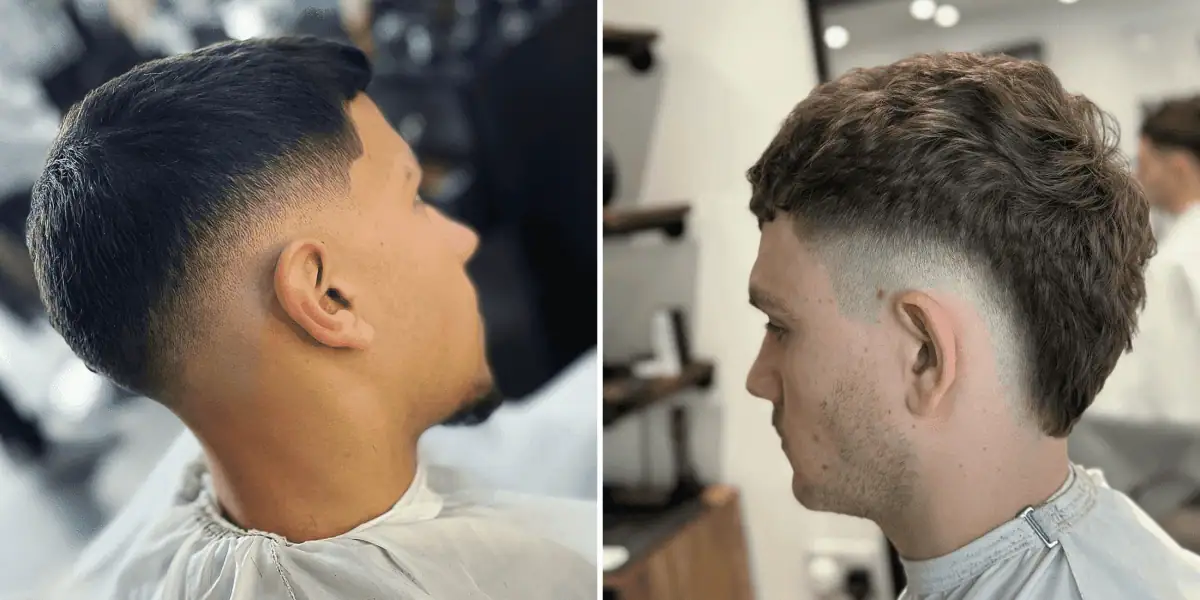
A burst fade wraps around the ear and makes the side of the haircut stand out more. A drop fade dips lower behind the ear and follows the head into the back.
That difference changes the whole cut.
I’d choose the fade based on the haircut, not just the name.
Here’s the real difference between a burst fade and a drop fade, and how to know which one your haircut actually needs.

In this article
A Burst Fade Wraps Around the Ear

A burst fade is built around one thing: the ear.
Instead of the fade running in a straight line around the sides and back, it curves around the ear in a rounded shape. That curve is what gives the burst fade its look.
It changes the side of the haircut more than the back.
That’s why you see burst fades with mullets, mohawks, faux hawks, curly tops, and heavier textured styles. The fade opens up the ear area while leaving more hair behind it, depending on the cut.
That detail matters.
If the back is left heavier, the haircut can feel wider and more aggressive. If the back is blended tighter, the burst fade can feel less extreme.
For me, a burst fade makes the most sense when the haircut is meant to have more action through the sides.
It’s not the fade I’d choose if you want the easiest everyday cut.
It works best when the shape around the ear is part of the style.
A Drop Fade Drops Lower Behind the Head

A drop fade follows the head. That’s the entire difference in one sentence.
Instead of wrapping around the ear as the focus, the fade drops lower behind the ear and toward the back of the head. That lower line is what gives a drop fade its name.
It changes the whole fade line, not just the side of the haircut.
That’s why a drop fade works with more everyday styles. Crops, waves, curls, buzz cuts, side parts, and short textured cuts can all work with it because the fade follows the head instead of making the ear area the main feature.
I’d usually choose a drop fade when the haircut needs to look connected from the side into the back.
It can still be tight.
It can still show skin.
But it doesn’t usually have the same rounded, ear-focused look as a burst fade.
That makes it a better fit for most regular short haircuts, especially if you want the fade to look like part of the haircut rather than the whole point of it.
Your Hair Type Changes Which One Works

Curly hair usually suits a burst fade better. The curve gives the curl pattern somewhere to land without a hard, straight line cutting across it, which is why you see burst fades paired with curly tops so often.
Straight hair works well with either, but a drop fade tends to look cleaner. A straight fade line matches straight hair’s natural fall, so there’s less visual clash than you sometimes get pairing straight hair with a rounded burst.
Thick hair can carry a burst fade without it looking heavy, since there’s enough density on top to balance the extra detail around the ear. Thin or fine hair usually looks better with a drop fade, since a burst fade’s curve can draw more attention to a side that’s already showing more skin than you’d like.
None of this rules either fade out for any hair type. It just means your actual hair should be part of the decision, not just the name of the cut.
Which Fade Should You Choose for Your Haircut?

Styles aside, this comes down to two honest questions.
How much attention do you actually want on the side of your head? A burst fade looks great, but it announces itself. If you’d rather the haircut do its job quietly, that’s more than most men need day to day.
And how often are you happy to get it trimmed up again? A burst fade tends to lose its shape within ten to fourteen days, once the curve around the ear starts growing out unevenly, since there’s more detail there to maintain. A drop fade’s line is simpler, so it usually holds its look for closer to three weeks between visits.
For most men, I’d start with the drop fade if unsure. It asks less of you and works with more haircuts, which makes it the safer starting point when you’re not chasing a specific look.
If you already know you want the ear area to be part of the style, that’s the signal to ask for a burst fade instead.
The Beard Beasts Verdict
The whole burst fade vs drop fade debate comes down to one thing: they aren’t the same haircut. Saying the name isn’t enough, your barber needs to know which one you actually mean.
I’d choose a burst fade when the sides are meant to stand out. I’d choose a drop fade when the haircut needs to work quietly with everything else going on.
For most men, the drop fade is the safer first choice. The burst fade makes sense once you actually want the side profile doing some of the talking.
That’s the real decision. Which fade does the haircut need?