
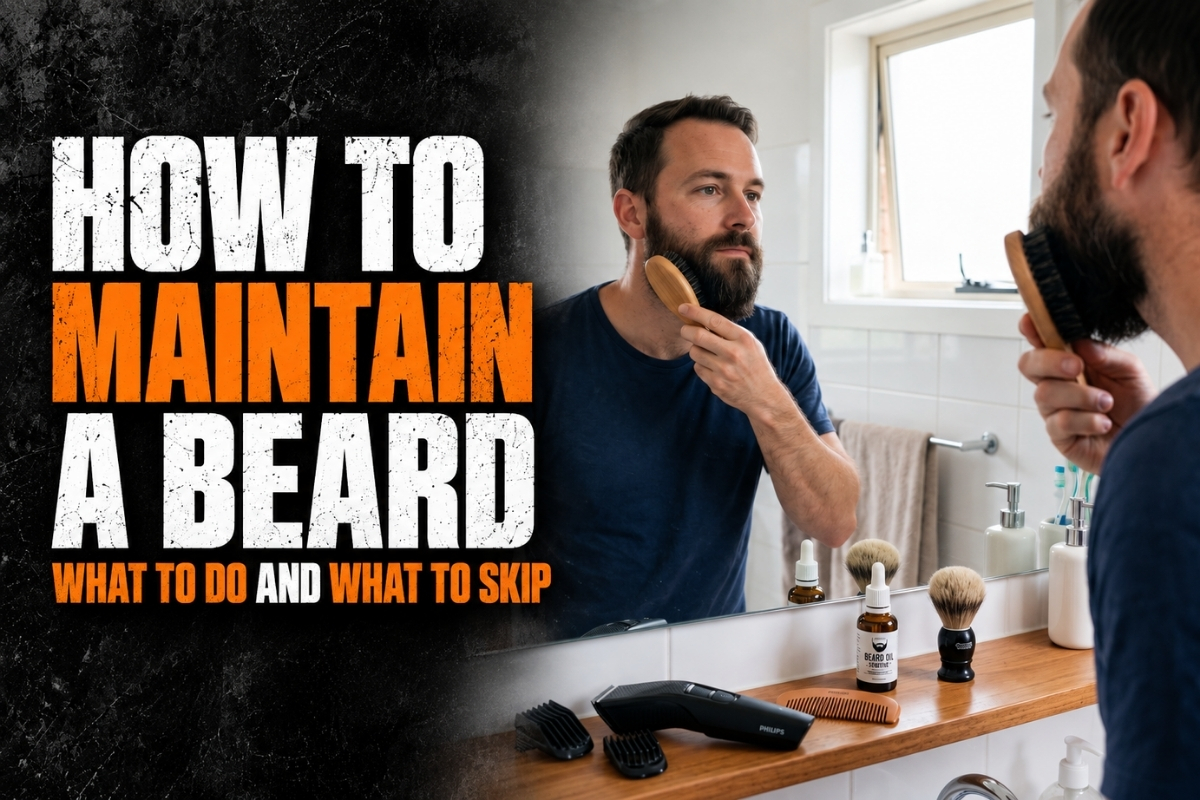
Learning how to maintain a beard shouldn’t mean building a grooming routine that takes longer than getting dressed.
Beard maintenance can get complicated fast when every rough hair, dry patch, or bad beard morning feels like another problem to solve. Add a new product, trim a little more, and before long you are doing far more than the beard actually needs.
Different beard problems need different fixes. Dry skin underneath needs a different approach from rough beard hair, and sometimes the beard feels completely fine but still will not stay where you want it.
I’d start by working out what needs attention, then deal with that instead of throwing the entire bathroom cabinet at your face.

In this article
Washing Is Where Beard Maintenance Can Go Wrong
Washing seems like the easiest part of beard maintenance, but it can also be one of the quickest ways to leave the beard feeling rougher.

If your beard regularly feels rough, stiff, or harder to manage after washing, I’d look at the washing routine before reaching for more oil, butter, or conditioner. The beard wash may be too harsh, the water may be too hot, or you may simply be scrubbing more than you need to.
There’s no single washing schedule that works for every beard.
How often you need to wash yours depends on things like sweat, buildup, and how your skin and beard react. I wouldn’t force it into a fixed routine just because someone says you should.
When you do wash it, there is no need to scrub hard. Work the beard wash through the hair and down to the skin underneath, rinse it out properly, and stick with warm water.
Drying can make the beard rougher again if you are too aggressive with it.
Rubbing it back and forth with a towel can leave the hairs sticking out in different directions, especially if your beard is curly or coarse. I’d pat it dry or gently squeeze out the excess water instead.
The point at which the beard starts feeling worse gives you a useful clue. If it already feels rough after rinsing, I’d look at the beard wash, water temperature, or how often you are washing. If it feels fine until you dry it, the drying technique may be the problem.
A beard that feels comfortable after washing doesn’t need a harsher routine because you think it should feel more “washed.” Needing to rescue it with more product every time is a good reason to fix the washing routine first.
Beard Wash Pick
Jack Black Beard Wash

If your current beard wash regularly leaves the hair feeling rough or stripped, Jack Black Beard Wash is one I’d look at before trying to fix the problem with more product afterward.
Your Skin and Beard Hair Don’t Need the Same Thing
One of the easiest ways to overcomplicate beard maintenance is treating dry skin and dry beard hair like they’re the same problem. They can happen together, but they don’t need the same fix.
If the skin under your beard feels dry or tight, that’s where I’d start with beard oil. I mainly recommend it for the skin underneath, although the beard hair will pick some up as you work it through and get a little conditioning too.

If the beard hair itself feels rough or dry, beard conditioner makes more sense. I’d use it to soften the hair after washing rather than keep adding more beard oil and expecting the same result.
For a conditioner that you rinse out, think of it as part of the washing routine. Beard butter is a leave-in option when the hair needs more conditioning between washes.
Appearance alone is not enough to tell you whether your beard is actually dry. Coarse or wiry beard hair can naturally feel thicker and stiffer even when it is healthy. Keep adding product and you may end up with the same texture, just greasier.
If the skin under your beard stays red, sore, very flaky, or uncomfortable, I’d be more careful about treating it as simple dryness. Adding more beard oil is not always the answer.
Work out whether the problem is the skin, the hair, or your natural beard texture before choosing what to use.
What Does Your Beard Need?
Oil, Conditioner, or Butter?
If the Skin Underneath Feels Dry or Tight
Jack Black Beard Oil
If the problem is the skin underneath rather than the beard hair, Jack Black Beard Oil is the one I’d look at first.
If the Hair Feels Dry After Washing
Suavecito Beard Conditioner
If the beard hair itself feels rough or dry after washing, I’d start with conditioner rather than keep adding more beard oil.
If It Needs More Conditioning Between Washes
Detroit Grooming Co. Beard Butter
If the beard feels good after washing but gets rougher again later, beard butter gives you a leave-in conditioning option without much hold.
As an Amazon Associate, Beard Beasts may earn from qualifying purchases.
Get the Beard Into Shape Before You Decide It Needs Trimming
Your beard can look uneven even when the length is fine. Sometimes the hairs are simply lying in different directions and need brushing or combing back into place.
Curly, coarse, and longer beard hairs can sit differently after sleeping, washing, drying, or being pushed around during the day. One hair sticking out for a while is not a good enough reason to reach for the scissors.

Groom the beard the way you normally would before judging the shape. A beard brush can help bring shorter beard hairs into place and make the overall shape look more even. As you get more length, a beard comb can make it easier to work through the hair.
Then step back from the mirror and look at the beard as a whole.
If you’re close enough to inspect individual hairs like evidence at a crime scene, you’re probably looking too hard. What matters is whether the same area keeps looking uneven after you’ve groomed the beard. A hair that repeatedly sticks out well beyond the rest may need trimming. If it falls back into place after brushing or combing, leave it alone.
I’d also wait until the beard is fully dry before judging the shape. Beard hair can sit differently when it’s damp, so an area that looks uneven or out of place straight after washing may look completely normal once it dries.
The point is to judge your beard after you’ve groomed it the way you normally do before deciding anything needs cutting. That way you’re fixing a real problem rather than trimming because the beard happened to have a bad five minutes.
Trim to Keep the Shape You Already Like
Once the beard is dry and groomed the way you normally keep it, trimming should be about maintaining what’s already working. You’re not starting again every time the scissors or beard trimmer come out.
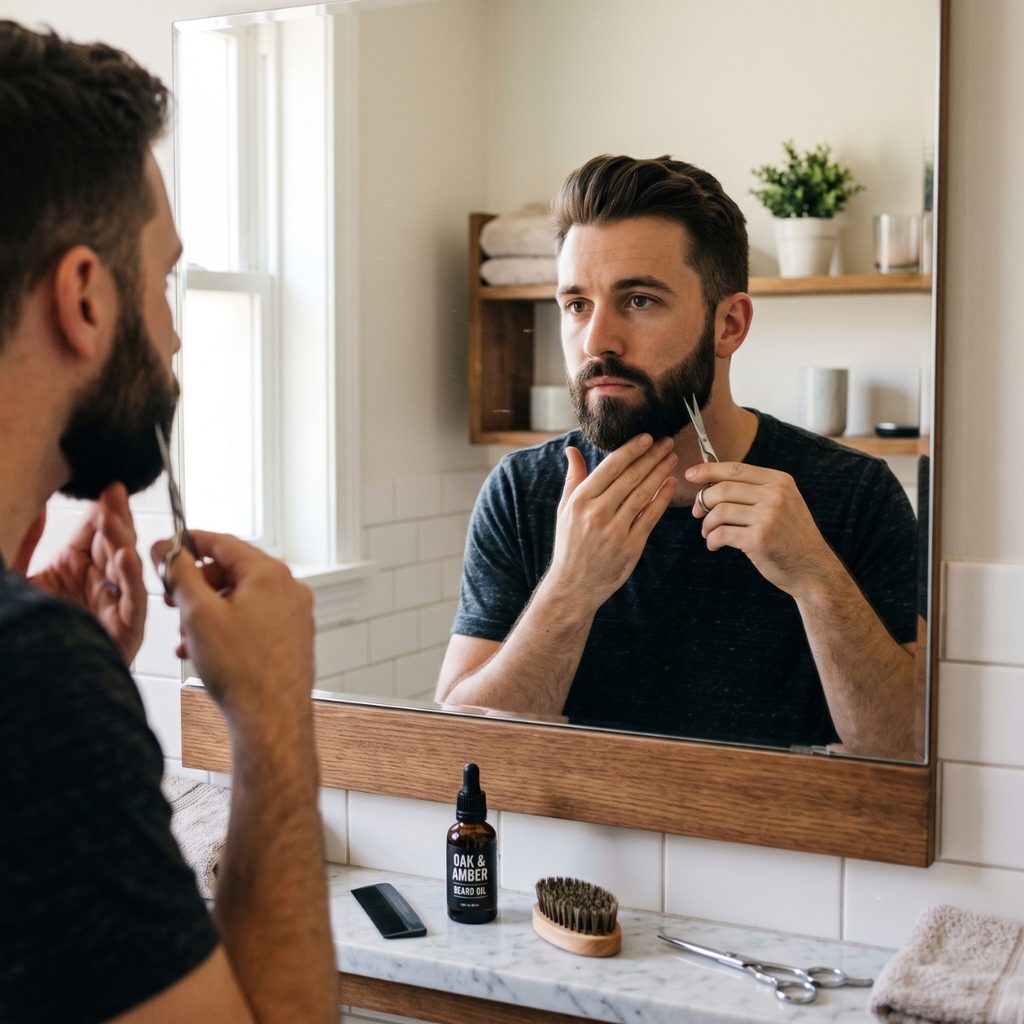
Look at the overall shape first. If one area has grown noticeably longer, looks bulkier than the rest, or has rough or split ends, that may be worth trimming.
A couple of hairs sticking out for a while are a different story.
Scissors make sense for individual ends or mustache hairs, while a trimmer with a guard is more useful when you want to reduce length or bulk across a larger area. Start cautiously when you’re unsure how much to remove. You can always take more off, but growing it back takes a lot longer.
The mustache is worth checking separately because it can become annoying before the rest of the beard needs much attention. Hairs that keep dropping over the lip or getting into your mouth can be dealt with individually, rather than shortening the whole mustache.
The cheek line and neckline deserve care too. Removing obvious growth can keep them under control, but taking either line too far can change the beard more than you expected. Maintenance should preserve the shape you like, not give you a different beard by accident.
A trim also doesn’t have to remove healthy length to count. When the overall shape still looks good, leave the parts that are working alone.
If the Beard Feels Fine but Still Looks Messy, Think Control
Sometimes the beard feels soft enough and the skin underneath is comfortable, but it still looks puffy, unruly, or determined to point in several directions at once. That’s when I’d stop treating it like a dryness problem.
More oil, conditioner, or butter may make the hair feel softer, but that doesn’t necessarily help it stay where you want it.
Beard balm makes sense when the beard can already be brushed into a decent shape but needs help staying there. Hold varies between products, so I’d use balm for flyaways and general control rather than expect it to completely reshape stubborn curls.
Heat makes more sense when brushing and balm still aren’t giving you the shape you want. With a blow dryer, brush or comb the beard while guiding it into place, and keep the dryer moving rather than holding the heat on one area.
A heated beard brush is another option for a longer, curlier, or puffier beard that needs more help with shaping. There’s no reason to jump straight to one when a normal brush and blow dryer already do the job. Follow the instructions for the specific tool you use, including whether the beard needs to be completely dry first.
You also don’t need to straighten every bit of curl out. If the overall shape looks good, leave some of the natural texture alone.
What Kind of Control Do You Need?
Beard Balm or Heated Brush?
If the Beard Needs Help Staying in Shape
18.21 Man Made Beard Balm
If you can already brush the beard into a shape you like but flyaways keep coming back, I’d try balm before reaching for a heated tool.
If the Beard Needs More Help With Shaping
Aberlite EDC Premium Beard Straightener Brush
If brushing, balm, and a blow dryer still aren’t giving a longer or curlier beard enough control, the Aberlite EDC is the heated beard brush I’d look at next.
As an Amazon Associate, Beard Beasts may earn from qualifying purchases.
How I’d Maintain a Beard Long Term
The longer you maintain a beard, the less complicated the routine should be. You start learning what normal looks and feels like for your beard, which makes changes much easier to spot.
I wouldn’t build the whole routine around a strict calendar. Beard length, texture, weather, activity, and the way you style it can all affect what works. A routine that made sense months ago doesn’t have to stay the same forever.
A product or tool should have a clear job in solving a problem you have. Keep what works, and stop using the extra step when it no longer does anything useful.
There’s no prize for keeping a routine complicated out of habit.
Your needs may also change as the beard gets longer. More length can mean more shaping, while something you used when the beard was short may stop doing much for you. That’s normal maintenance, not a reason to rebuild everything from scratch.
Knowing how to maintain a beard long term is mostly about knowing what your beard normally needs and noticing when that changes.
Once it looks good, feels comfortable, and behaves well enough for you, you’ve done the job. There’s no bonus round.