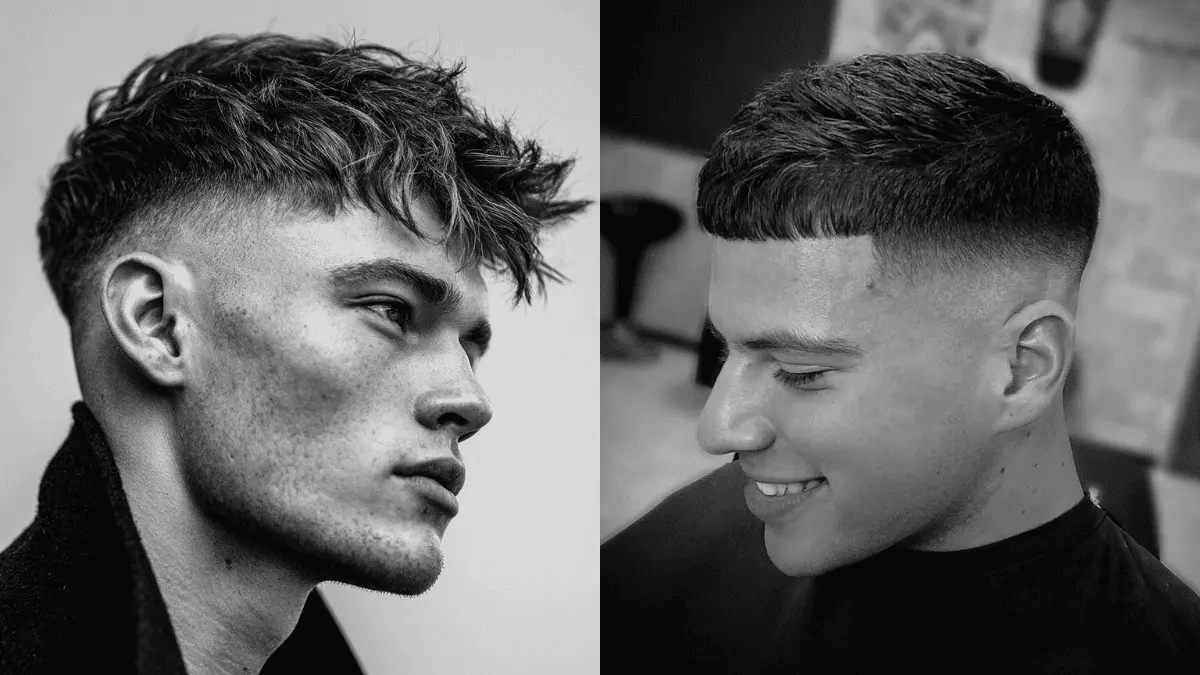
Most men line up a crew cut against a fade like they’re two separate haircuts you have to pick between. That’s where the whole thing goes sideways, because the two aren’t competing at all. A crew cut is the haircut. A fade is what happens to the sides and back. One decides the haircut. The other decides how tight the sides look.
It matters because plenty of men walk into the shop asking for a fade before they’ve decided what they actually want on top. Others ask for a crew cut, then hold up a photo where the faded sides are quietly doing half the work, and they have no idea that’s what they’re reacting to.
So the real question usually isn’t “crew cut or fade.” It’s this: do you want a crew cut, and if so, how tight do you want the sides? Get that order right and most of the confusion clears up on its own.
A Crew Cut Is the Haircut. The Fade Is the Sides.

Here’s the bit a lot of guys miss, so it’s worth being clear about.
A crew cut is a short haircut with some length kept on top and shorter sides. The key word is some. There should still be shape through the top, especially towards the front. Clip it short everywhere and you’ve left crew cut territory for a buzz cut.
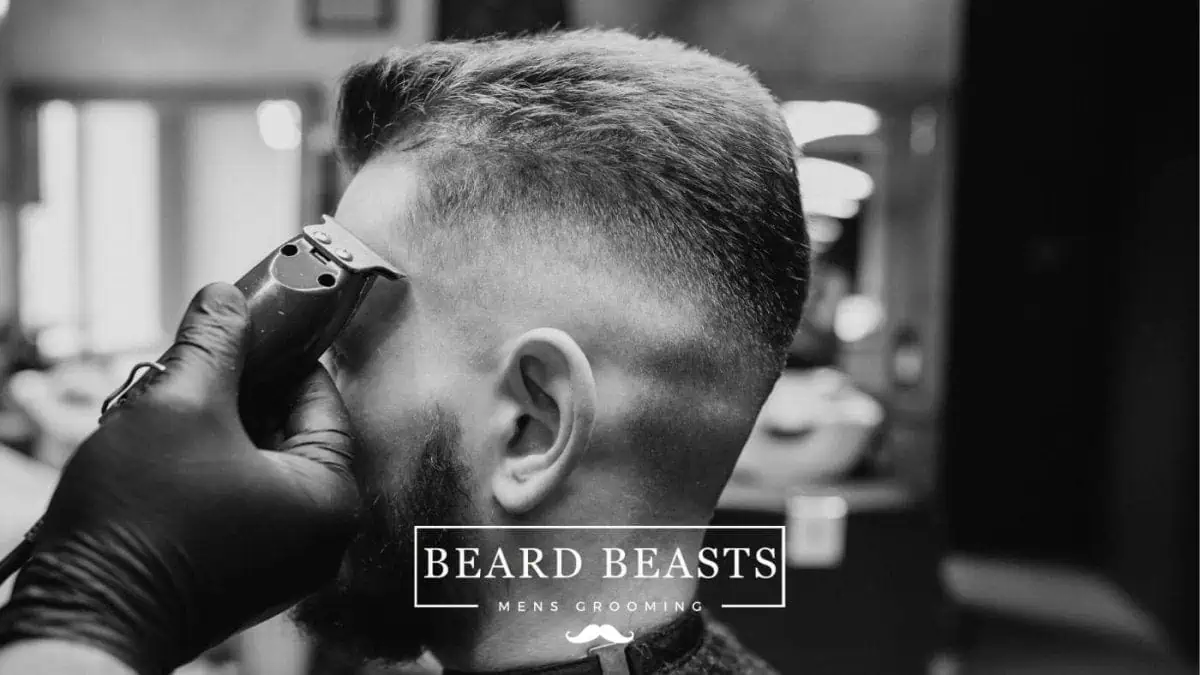
A fade is its own thing. It’s the way the sides and back are blended shorter as they drop down, whether that’s a low, mid, high, taper or skin fade. So the comparison gets muddled fast. You can have a crew cut with a fade, a crew cut without one, or a fade sitting under a crop, a quiff, a pompadour, a buzz, almost anything.
Before I get into face shape, hair type or how often you’ll come back, I want this part straight first. The crew cut sets the haircut. The fade just sets how tight the sides read. Confuse the two and you can walk out with something short that still doesn’t suit you.
What “Just Give Me a Fade” Leaves Out

Fades get all the attention because they photograph beautifully. Tight sides, a neat blend, that fresh finish straight after the cut. Done properly, they look great. The trouble is that asking for “a fade” tells your barber what you want on the sides and almost nothing about the top.
That’s the trap I watch men fall into. The sides come out sharp, but the top has no direction. Too much length through the front, or too little to hold any crew cut shape, or weight piling up at the crown, or a top left floating with no connection to the rest of the cut. The fade looks decent for a few days, and the haircut still feels off.
A good fade tightens a good haircut. It strips out bulk and gives the sides some bite. What it can’t do is rescue a weak top. So if a crew cut is what you’re after, start there, then work out how close the sides should go.
What Actually Makes a Crew Cut Work
A good crew cut is simple, though simple and lazy are two very different things. That’s the distinction that trips people up.
You need enough length on top for it to read as a crew cut rather than a buzz cut that’s grown out a touch. The front usually wants a bit more presence, the crown needs to sit properly, and the sides have to stay short enough that your head keeps a stronger shape.
When one goes wrong, it’s nearly always because someone treated it as a guard number instead of a real haircut. Go too short on top and you lose the crew cut feel. Leave the front too flat and it looks dull. Carry too much weight on the sides and the whole cut goes round.
This is also why I’m wary of saying a crew cut suits everyone. It suits a lot of men, but only once it’s shaped to the head it’s on.
A square face carries a crew cut nicely. A rounder face usually wants tighter sides. A longer face calls for more care with fade height. Thick hair often needs weight taken out around the temples, and fine hair needs enough length left on top to keep some body.
That’s where the cut is won or lost. A crew cut should look easy, but not careless.
What a Fade Can Fix, and What It Can Wreck
The right fade can be the thing that makes a crew cut work. If your sides grow in thick, it stops the cut spreading wide too fast. If you’re dense around the temples, faded sides pull the whole shape in tighter. And if a plain crew cut feels a bit flat to you, a fade gives it some welcome contrast.
The wrong fade throws a cut off just as quickly. A high fade can stretch a long face longer. A skin fade can look too severe if you’ve got dark hair over a pale scalp. A really tight fade puts every bump, dent and uneven patch on show, the kind of thing longer sides quietly cover. And on thick hair, a weak fade can grow out badly inside a few days.
Skin fades still have their place. They’re just worth thinking about rather than defaulting to, because the closer you go, the less the haircut forgives.
A low fade keeps a crew cut classic. A mid fade adds contrast while leaving the character of the cut intact. A high fade is stronger, though it leans on having the right head shape under it. A skin fade, the tightest of the lot, asks the most of your scalp contrast, your hair density and your willingness to keep it up.
The fade is there to support the crew cut. The moment it takes over, something’s gone wrong.
The Version Most Men Should Actually Walk Out With
For the average man, the right answer is neither a plain crew cut nor a dramatic fade. It’s a crew cut with the sides handled properly, and where you land depends on what your hair does.
Puffy sides? Take them shorter. Scalp that shows easily? Go gentle on the skin fade. A round face wants less width left near the temples, and a long face is better off staying clear of a high fade. Thick hair needs the sides kept under control, while fine hair needs enough length on top to hold some body.
This is also why copying a photo is a gamble. The guy in it might simply have the right density, the right head shape and the right barber, and the same fade on a different head can read like a completely different haircut.
My honest take is that a low or mid fade crew cut is the safest modern version for most of you. You get enough contrast without it tipping into severe, you keep the short, sharp feel of the crew cut, and the sides sit tighter and neater. For the majority of men, that’s the sweet spot.
The Real Mistake: Picking the Finish Before the Haircut
Here’s the error behind a lot of bad short haircuts. Men lock in the finish before they’ve sorted the haircut. They settle on a skin fade, a taper, a high fade, whatever it is, before asking the question that actually matters: does the crew cut itself work on me?
If the top is wrong, the sides won’t save it. Cut it too short and it’s a buzz cut. Leave the front too flat and it looks lifeless. Ignore the crown and it sits badly from the back and the side. Take the sides too high and you’ve quietly changed the whole character of the cut.
So the order matters.
First work out whether a crew cut is even the right haircut for you. Then decide whether the sides want a taper, a low fade, a mid fade or something tighter. That’s a far better way to go about it than walking in, saying “give me a fade,” and hoping the rest sorts itself out. It usually doesn’t.
The Beard Beasts Verdict
Crew cut vs fade is the wrong fight. A crew cut is the haircut. A fade is how the sides and back are finished, and the best results come from sorting them in that order.
Want something short, simple and classic? Start with the crew cut. Sides growing bulky, or after a bit more contrast? Add a fade. And if you want the safest modern version, go low or mid before you jump straight to a high skin fade.
For most men, the strongest choice was never crew cut or fade. It’s crew cut first, then the right finish on the sides.